A 60-minute walk through the corridors, boxes and backstage history of the world's most famous opera house.
Book the Guided Tour| Detail | Info |
|---|---|
| ⏱ Duration | 60 minutes* |
| 💶 Cost | €35 per person (museum included)* |
| 📍 Meeting point | Ridotto Arturo Toscanini* |
| 👶 Minimum age | 12 years* |
| ♿ Accessibility | Not suitable for visitors with mobility impairments* |
| 📅 Availability | Tickets released on a monthly basis* |
| 📸 Photography | Personal use only, no flash* |
*Data from the official website museoscala.org. Verify before booking.
The guided tour of Teatro alla Scala is not a stroll with a shared audio device. It is a structured, expert-led experience that takes you into areas of the theatre entirely off-limits to standard visitors. In 60 minutes, you move through spaces that have witnessed the greatest voices in the history of opera — rooms that carry a particular quality of silence, as though saturated with sound.
Having accompanied friends, colleagues and occasional strangers to La Scala over many years, the difference between visiting the museum independently and taking the guided tour is not a matter of degree. It is a different experience altogether. The guide turns architecture and objects into stories. Without one, you risk walking past extraordinary details without registering what you are seeing.
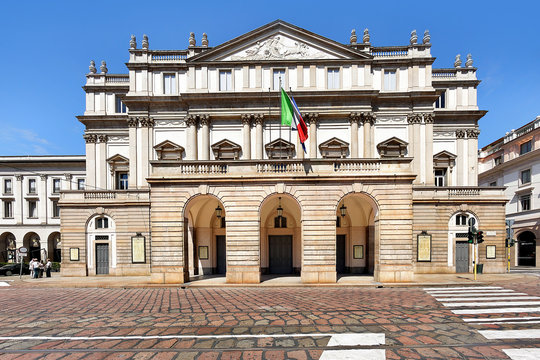
The tour begins at the Ridotto Arturo Toscanini, an elegant foyer named for the conductor most closely identified with La Scala's golden era. From here, the guide takes you through:
The question comes up often: "Is it worth paying €35 when the museum alone is around €12?" The answer is yes, and the reasoning is not about price but about access and comprehension.
| Feature | Museum Only | Guided Tour + Museum |
|---|---|---|
| Exhibition rooms | ✓ | ✓ |
| View into auditorium (if available) | ✓ | ✓ |
| Ridotto Toscanini | ✗ | ✓ |
| Internal theatre corridors | ✗ | ✓ |
| Royal Box | ✗ | ✓ |
| Historic second-tier boxes | ✗ | ✓ |
| Expert guide with historical context | ✗ | ✓ |
| Indicative price | From around €12* | €35* |
*Prices from the official website museoscala.org, subject to change.
Booking the La Scala guided tour requires attention to timing in a way that most museum visits do not. The spots are genuinely limited, and the demand — particularly from April to October — genuinely exceeds supply.
Guided tour tickets are released on a monthly basis, aligned with the theatre's production calendar. This means you cannot book six months in advance and forget about it. You need to wait until the month you want becomes available, then act quickly when it does.
What this means in practice: if you are visiting in June, you typically cannot book in March. Watch the official website for when June opens — usually toward the end of May — and have your details ready.
Here is how a typical La Scala guided tour unfolds, based on direct experience and feedback from visitors who have taken the tour through various providers.
Arrive at the meeting point — the Ridotto Arturo Toscanini, on the ground floor of the theatre building — at least 15 minutes before the scheduled start. The guide takes a register and distributes earpieces for larger groups. Use this time to read the brief notes usually posted at the entrance; they provide useful context before the tour begins.
The guide moves the group through the corridors at a measured pace — unhurried, but not leisurely. There is time to look, listen and ask questions. The narrative covers the architecture and history of the building, the stories of the artists who defined the theatre's reputation, and the mechanics of how a 19th-century opera house actually functioned as a social institution.
Three moments stand out in almost every account:
Your ticket gives you full access to the museum, which you visit independently after the tour ends. Many people undervalue this part of the experience. After 60 minutes of guided context, the objects in the museum — the costumes, the instruments, the scores — mean considerably more than they would have at the start of the day.
Tuesday and Wednesday consistently show the lowest visitor numbers. Monday can be variable — some Milan museums close on Mondays, concentrating visitors at the ones that remain open. Weekends are always the busiest, with Saturday morning being the absolute peak.
The guided tour has specific conditions that are worth understanding before you commit to a booking:
Information from visit conditions at museoscala.org.
If the official tour is sold out or does not fit your needs, there are genuine alternatives worth considering:
Licensed local guides offer private visits that can be tailored to your interests and schedule. The cost is higher — typically €100 or more per person — but availability is generally more flexible, and the experience can be significantly more personalised.
If the guided tour is not available, the museum ticket still allows you to look into the theatre from the boxes — assuming no rehearsals are taking place. It is a reduced version of the experience, but it is not nothing.
The most authentic experience of all. A ticket to an opera, ballet or concert allows you to experience the theatre exactly as it was designed to be used. Even a seat in the upper gallery puts you inside the world's most famous opera house at full power.
There are dozens of opera houses in Europe that offer backstage tours. The Paris Opera, the Vienna State Opera, the Colón in Buenos Aires — all of them have their own version of this experience. What makes La Scala different?
Partly it is the weight of the repertoire. The works that define the Italian operatic tradition — Verdi, Puccini, Donizetti, Bellini — were premiered here or shaped here in their most important productions. The building is not merely a venue; it is an active participant in the history it represents.
Partly it is the architecture. Piermarini's 18th-century design has been restored and maintained with remarkable fidelity to the original. The boxes, the proportions of the auditorium, the relationship between stage and audience — these are not approximations of historical opera house design. They are the thing itself.
And partly it is the ongoing life of the institution. La Scala is not a heritage site frozen in amber. It is an active, internationally respected theatre with one of the most demanding seasons in the world. When you walk its corridors, you are walking corridors that singers and conductors walked last week — and will walk again tomorrow.
Yes — aim to arrive at least 15 minutes before the scheduled start. The guide needs to verify bookings and organise the group before setting off. Late arrivals may not be able to join the tour once it has begun.
Tours are available in several languages. Check specific language availability when booking, as this can vary by time slot and season. English-language tours are typically well represented in the schedule.
Groups are kept to a manageable size to maintain quality. The exact number varies — check when booking. Smaller groups obviously offer a better experience, and booking in advance is the only way to control this variable.
Small bags and day packs are generally allowed. Large bags, wheelie cases and bulky luggage may need to be left at the cloakroom. Check the current regulations at the time of your visit.
No. The stage is not part of the standard guided tour route. It is an active working space and access is strictly controlled. The tour covers the Ridotto Toscanini, the internal corridors, the Royal Box and the second-tier boxes.
Tours can be cancelled for theatrical or technical reasons with little notice. A full refund is issued in these cases according to the official website. This is worth factoring into your day's planning — having a flexible backup activity is sensible, especially if you are visiting during a busy production period.
Do not leave this to the last minute. Spots fill quickly — especially on weekends and during peak season. Secure your place now.
Check Availability and Book